
Template:Redirect Template:Merging from
Template:Use American English Template:Use mdy dates
Harvard University is a private Ivy League research university in Cambridge, Massachusetts. Founded in 1636 as Harvard College and named for its first benefactor, the Puritan clergyman John Harvard, it is the oldest institution of higher learning in the United States and among the most prestigious in the world.[1]
The Massachusetts colonial legislature authorized Harvard's founding, "dreading to leave an illiterate ministry to the churches, when our present ministers shall lie in the dust"; though never formally affiliated with any denomination, in its early years Harvard College primarily trained Congregational clergy. Its curriculum and student body were gradually secularized during the 18th century, and by the 19th century, it had emerged as the central cultural establishment among the Boston elite.[2][3] Following the American Civil War, President Charles William Eliot's long tenure (1869–1909) transformed the college and affiliated professional schools into a modern research university; Harvard became a founding member of the Association of American Universities in 1900.[4] James B. Conant led the university through the Great Depression and World War II, and liberalized admissions after the war.
The university is composed of ten academic faculties plus the Harvard Radcliffe Institute. Arts and Sciences offers study in a wide range of academic disciplines for undergraduates and for graduates, while the other faculties offer only graduate degrees, mostly professional. Harvard has three main campuses:[5] the Template:Convert Cambridge campus centered on Harvard Yard; an adjoining campus immediately across the Charles River in the Allston neighborhood of Boston; and the medical campus in Boston's Longwood Medical Area.[6] Harvard's endowment is valued at $53.2 billion, making it the largest of any academic institution.[7] Endowment income helps enable the undergraduate college to admit students regardless of financial need and provide generous financial aid with no loans.[8] The Harvard Library is the world's largest academic library system, comprising 79 individual libraries holding about 20.4 million items.[9][10]Template:Refn[11]
Harvard alumni, faculty, and researchers have included numerous Nobel laureates, Fields Medalists, members of the U.S. Congress, MacArthur Fellows, Rhodes Scholars, Marshall Scholars, and Fulbright Scholars, all of which are arguably the most among all higher education institutions over the globe, depending upon the metrics a list adopts.[12] Its alumni include eight U.S. presidents and 188 living billionaires, the most of any university. Fourteen Turing Award laureates have been Harvard affiliates. Students and alumni have won 10 Academy Awards, 48 Pulitzer Prizes, and 110 Olympic medals (46 gold), and they have founded many notable companies.
History
Colonial era
Harvard was established in 1636 by vote of the Great and General Court of the Massachusetts Bay Colony. In 1638, it acquired British North America's first known printing press.[14][15] In 1639, it was named Harvard College after deceased clergyman John Harvard, an alumnus of the University of Cambridge who had left the school £779 and his library of some 400 volumes.[16] The charter creating the Harvard Corporation was granted in 1650.
A 1643 publication gave the school's purpose as "to advance learning and perpetuate it to posterity, dreading to leave an illiterate ministry to the churches when our present ministers shall lie in the dust."[17] It trained many Puritan ministers in its early years[18] and offered a classic curriculum based on the English university modelTemplate:Mdashbmany leaders in the colony had attended the University of CambridgeTemplate:Mdashbbut conformed to the tenets of Puritanism. Harvard has never affiliated with any particular denomination, though many of its earliest graduates went on to become clergymen in Puritan churches.[19]
Increase Mather served as president from 1681 to 1701. In 1708, John Leverett became the first president who was not also a clergyman, marking a turning of the college away from Puritanism and toward intellectual independence.[20]
19th century
In the 19th century, Enlightenment ideas of reason and free will were widespread among Congregational ministers, putting those ministers and their congregations in tension with more traditionalist, Calvinist parties.[21]Template:Rp When Hollis Professor of Divinity David Tappan died in 1803 and President Joseph Willard died a year later, a struggle broke out over their replacements. Henry Ware was elected to the Hollis chair in 1805, and the liberal Samuel Webber was appointed to the presidency two years later, signaling the shift from the dominance of traditional ideas at Harvard to the dominance of liberal, Arminian ideas.[21]Template:Rp[22]Template:Rp
Charles William Eliot, president 1869–1909, eliminated the favored position of Christianity from the curriculum while opening it to student self-direction. Though Eliot was the crucial figure in the secularization of American higher education, he was motivated not by a desire to secularize education but by Transcendentalist Unitarian convictions influenced by William Ellery Channing and Ralph Waldo Emerson.[23]
Programs in the study of French and Spanish languages began in 1816 with George Ticknor as its first professor.
20th century
In the 20th century, Harvard's reputation grew as a burgeoning endowment and prominent professors expanded the university's scope. Rapid enrollment growth continued as new graduate schools were begun and the undergraduate college expanded. Radcliffe College, established in 1879 as the female counterpart of Harvard College, became one of the most prominent schools for women in the United States. Harvard became a founding member of the Association of American Universities in 1900.[4]
The student body in the early decades of the century was predominantly "old-stock, high-status Protestants, especially Episcopalians, Congregationalists, and Presbyterians."[25] In 1923—a year after the percentage of Jewish students at Harvard had reached 20%—President A. Lawrence Lowell supported a policy change that limited Jewish students to 15% of the undergraduate population. While Lowell's idea was rejected, he did manage to ban black students from freshman dormitories.[26][27][28]
President James B. Conant, who led the university from 1933 to 1953, reinvigorated creative scholarship to guarantee Harvard's preeminence among research institutions. He saw higher education as a vehicle of opportunity for the talented rather than an entitlement for the wealthy, so Conant devised programs to identify, recruit, and support talented youth. In 1943, he asked the faculty to make a definitive statement about what general education ought to be, at the secondary as well as at the college level. The resulting Report, published in 1945, was one of the most influential manifestos in 20th century American education.[29]
Between 1945 and 1960, admissions were opened up to bring in a more diverse group of students. No longer drawing mostly from select New England prep schools, the undergraduate college became accessible to striving middle class students from public schools; many more Jews and Catholics were admitted, but few blacks, Hispanics, or Asians.[30]
Throughout the rest of the 20th century, Harvard became more diverse.[31]However, it is still noted that Harvard largely favours white admits. When it comes to athletics, the share for African American, Asian American, and Hispanics is less than 16% and if it were not for their racial status, a large number of those students would have been rejected.[32]
Harvard's graduate schools began admitting women in small numbers in the late 19th century. During World War II, students at Radcliffe College (which since 1879 had been paying Harvard professors to repeat their lectures for women) began attending Harvard classes alongside men.[33]
Women were first admitted to the medical school in 1945.[34] Since 1971, Harvard has controlled essentially all aspects of undergraduate admission, instruction, and housing for Radcliffe women. In 1999, Radcliffe was formally merged into Harvard.[35]
21st century
Drew Gilpin Faust, previously the dean of the Radcliffe Institute for Advanced Study, became Harvard's first female president on July 1, 2007.[36] She was succeeded by Lawrence Bacow on July 1, 2018.[37]
Campuses
Cambridge
Template:See also Harvard's Template:Convert main campus is centered on Harvard Yard ("the Yard") in Cambridge, about Template:Convert west-northwest of downtown Boston, and extends into the surrounding Harvard Square neighborhood. The Yard contains administrative offices such as University Hall and Massachusetts Hall; libraries such as Widener, Pusey, Houghton, and Lamont; and Memorial Church.
The Yard and adjacent areas include the main academic buildings of the Faculty of Arts and Sciences, including the college, such as Sever Hall and Harvard Hall.
Freshman dormitories are in, or adjacent to, the Yard. Upperclassmen live in the twelve residential housesTemplate:Sndnine south of the Yard near the Charles River, the others half a mile northwest of the Yard at the Radcliffe Quadrangle (which formerly housed Radcliffe College students). Each house is a community of undergraduates, faculty deans, and resident tutors, with its own dining hall, library, and recreational facilities.[38]
Also in Cambridge are the Law, Divinity (theology), Engineering and Applied Science, Design (architecture), Education, Kennedy (public policy), and Extension schools, as well as the Radcliffe Institute for Advanced Study in Radcliffe Yard.[39] Harvard also has commercial real estate holdings in Cambridge.[40][41]
Allston
Template:See also Harvard Business School, Harvard Innovation Labs, and many athletics facilities, including Harvard Stadium, are located on a Template:Convert campus in Allston,[42] a Boston neighborhood just across the Charles River from the Cambridge campus. The John W. Weeks Bridge, a pedestrian bridge over the Charles River, connects the two campuses.
The university is actively expanding into Allston, where it now owns more land than in Cambridge.[43] Plans include new construction and renovation for the Business School, a hotel and conference center, graduate student housing, Harvard Stadium, and other athletics facilities.[44]
In 2021, the Harvard John A. Paulson School of Engineering and Applied Sciences will expand into a new, 500,000+ square foot Science and Engineering Complex (SEC) in Allston.[45] The SEC will be adjacent to the Enterprise Research Campus, the Business School, and the Harvard Innovation Labs to encourage technology- and life science-focused startups as well as collaborations with mature companies.[46]
Longwood
The schools of Medicine, Dental Medicine, and Public Health are located on a Template:Convert campus in the Longwood Medical and Academic Area in Boston, about Template:Convert south of the Cambridge campus.[6] Several Harvard-affiliated hospitals and research institutes are also in Longwood, including Beth Israel Deaconess Medical Center, Boston Children's Hospital, Brigham and Women's Hospital, Dana–Farber Cancer Institute, Joslin Diabetes Center, and the Wyss Institute for Biologically Inspired Engineering. Additional affiliates, most notably Massachusetts General Hospital, are located throughout the Greater Boston area.
Other
Harvard owns the Dumbarton Oaks Research Library and Collection in Washington, D.C., the Harvard Forest in Petersham, Massachusetts, the Concord Field Station in Estabrook Woods in Concord, Massachusetts,[47] the Villa I Tatti research center in Florence, Italy,[48] the Harvard Shanghai Center in Shanghai, China,[49] and the Arnold Arboretum in the Jamaica Plain neighborhood of Boston.
Organization and administration
Governance
| School | Founded |
| Harvard College | 1636 |
| Medicine | 1782 |
| Divinity | 1816 |
| Law | 1817 |
| Dental Medicine | 1867 |
| Arts and Sciences | 1872 |
| Business | 1908 |
| Extension | 1910 |
| Design | 1914 |
| Education | 1920 |
| Public Health | 1922 |
| Government | 1936 |
| Engineering and Applied Sciences | 2007 |
Harvard is governed by a combination of its Board of Overseers and the President and Fellows of Harvard College (also known as the Harvard Corporation), which in turn appoints the President of Harvard University.[50] There are 16,000 staff and faculty,[51] including 2,400 professors, lecturers, and instructors.[52]
The Faculty of Arts and Sciences is the largest Harvard faculty and has primary responsibility for instruction in Harvard College, the Graduate School of Arts and Sciences, the John A. Paulson School of Engineering and Applied Sciences (SEAS), and the Division of Continuing Education, which includes Harvard Summer School and Harvard Extension School. There are nine other graduate and professional faculties as well as the Radcliffe Institute for Advanced Study.
Joint programs with the Massachusetts Institute of Technology include the Harvard–MIT Program in Health Sciences and Technology, the Broad Institute, The Observatory of Economic Complexity, and edX.
Endowment
Harvard has the largest university endowment in the world, valued at about $41.9 billion as of 2020.[7] During the recession of 2007–2009, it suffered significant losses that forced large budget cuts, in particular temporarily halting construction on the Allston Science Complex.[53] The endowment has since recovered.[54][55][56][57][58]
About $2 billion of investment income is annually distributed to fund operations.[59] Harvard's ability to fund its degree and financial aid programs depends on the performance of its endowment; a poor performance in fiscal year 2016 forced a 4.4% cut in the number of graduate students funded by the Faculty of Arts and Sciences.[60] Endowment income is critical, as only 22% of revenue is from students' tuition, fees, room, and board.[61]
Divestment
Since the 1970s, several student-led campaigns have advocated divesting Harvard's endowment from controversial holdings, including investments in apartheid South Africa, Sudan during the Darfur genocide, and the tobacco, fossil fuel, and private prison industries.[62][63]
In the late 1980s, during the divestment from South Africa movement, student activists erected a symbolic "shantytown" on Harvard Yard and blockaded a speech by South African Vice Consul Duke Kent-Brown.[64][65] The university eventually reduced its South African holdings by $230 million (out of $400 million) in response to the pressure.[64][66]
Academics
Teaching and learning
Harvard is a large, highly residential research university[68] offering 50 undergraduate majors,[69] 134 graduate degrees,[70] and 32 professional degrees.[71] For the 2018–2019 academic year, Harvard granted 1,665 baccalaureate degrees, 1,013 graduate degrees, and 5,695 professional degrees.[71]
Template:Main article The four-year, full-time undergraduate program has a liberal arts and sciences focus.[68][69] To graduate in the usual four years, undergraduates normally take four courses per semester.[72] In most majors, an honors degree requires advanced coursework and a senior thesis.[73] Though some introductory courses have large enrollments, the median class size is 12 students.[74]
Research
Harvard is a founding member of the Association of American Universities[75] and a preeminent research university with "very high" research activity (R1) and comprehensive doctoral programs across the arts, sciences, engineering, and medicine according to the Carnegie Classification.[68]
With the medical school consistently ranking first among medical schools for research,[76] biomedical research is an area of particular strength for the university. More than 11,000 faculty and over 1,600 graduate students conduct research at the medical school as well as its 15 affiliated hospitals and research institutes.[77] The medical school and its affiliates attracted $1.65 billion in competitive research grants from the National Institutes of Health in 2019, more than twice as much as any other university.[78]
Libraries and museums
The Harvard Library system is centered in Widener Library in Harvard Yard and comprises nearly 80 individual libraries holding about 20.4 million items.[9][10][11] According to the American Library Association, this makes it the largest academic library in the world.[10][79]
Houghton Library, the Arthur and Elizabeth Schlesinger Library on the History of Women in America, and the Harvard University Archives consist principally of rare and unique materials. America's oldest collection of maps, gazetteers, and atlases both old and new is stored in Pusey Library and open to the public. The largest collection of East-Asian language material outside of East Asia is held in the Harvard-Yenching Library.
The Harvard Art Museums comprise three museums. The Arthur M. Sackler Museum covers Asian, Mediterranean, and Islamic art, the Busch–Reisinger Museum (formerly the Germanic Museum) covers central and northern European art, and the Fogg Museum covers Western art from the Middle Ages to the present emphasizing Italian early Renaissance, British pre-Raphaelite, and 19th-century French art. The Harvard Museum of Natural History includes the Harvard Mineralogical Museum, the Harvard University Herbaria featuring the Blaschka Glass Flowers exhibit, and the Museum of Comparative Zoology. Other museums include the Carpenter Center for the Visual Arts, designed by Le Corbusier and housing the film archive, the Peabody Museum of Archaeology and Ethnology, specializing in the cultural history and civilizations of the Western Hemisphere, and the Harvard Museum of the Ancient Near East featuring artifacts from excavations in the Middle East.
Reputation and rankings
Template:Infobox US university ranking
| colspan=4 style="Template:CollegePrimaryStyle" |National Graduate Rankings[80] | |
|---|---|
| Program | Ranking |
| Biological Sciences | 4 |
| Business | 6 |
| Chemistry | 2 |
| Clinical Psychology | 10 |
| Computer Science | 16 |
| Earth Sciences | 8 |
| Economics | 1 |
| Education | 1 |
| Engineering | 22 |
| English | 8 |
| History | 4 |
| Law | 3 |
| Mathematics | 2 |
| Medicine: Primary Care | 10 |
| Medicine: Research | 1 |
| Physics | 3 |
| Political Science | 1 |
| Psychology | 3 |
| Public Affairs | 3 |
| Public Health | 2 |
| Sociology | 1 |
| colspan=4 style="Template:CollegePrimaryStyle" |Global Subject Rankings[81] | |
|---|---|
| Program | Ranking |
| Agricultural Sciences | 22 |
| Arts & Humanities | 2 |
| Biology & Biochemistry | 1 |
| Cardiac & Cardiovascular Systems | 1 |
| Chemistry | 15 |
| Clinical Medicine | 1 |
| Computer Science | 47 |
| Economics & Business | 1 |
| Electrical & Electronic Engineering | 136 |
| Engineering | 27 |
| Environment/Ecology | 5 |
| Geosciences | 7 |
| Immunology | 1 |
| Materials Science | 7 |
| Mathematics | 12 |
| Microbiology | 1 |
| Molecular Biology & Genetics | 1 |
| Neuroscience & Behavior | 1 |
| Oncology | 1 |
| Pharmacology & Toxicology | 1 |
| Physics | 4 |
| Plant & Animal Science | 13 |
| Psychiatry/Psychology | 1 |
| Social Sciences & Public Health | 1 |
| Space Science | 2 |
| Surgery | 1 |
Among overall rankings, the Academic Ranking of World Universities (ARWU) has ranked Harvard as the world's top university every year since it was released.[82] When QS and Times Higher Education collaborated to publish the Times Higher Education–QS World University Rankings from 2004 to 2009, Harvard held the top spot every year and continued to hold first place on THE World Reputation Rankings ever since it was released in 2011.[83] In 2019, it was ranked first worldwide by SCImago Institutions Rankings.[84] It was ranked in the first tier of American research universities, along with Columbia, MIT, and Stanford, in the 2019 report from the Center for Measuring University Performance.[85] Harvard University is accredited by the New England Commission of Higher Education.[86]
Among rankings of specific indicators, Harvard topped both the University Ranking by Academic Performance (2019–2020) and Mines ParisTech: Professional Ranking of World Universities (2011), which measured universities' numbers of alumni holding CEO positions in Fortune Global 500 companies.[87] According to annual polls done by The Princeton Review, Harvard is consistently among the top two most commonly named "dream colleges" in the United States, both for students and parents.[88][89][90] Additionally, having made significant investments in its engineering school in recent years, Harvard was ranked third worldwide for Engineering and Technology in 2019 by Times Higher Education.[91]
School rankings
| School | Founded | Enrollment | U.S. News & World Report |
|---|---|---|---|
| Harvard College | 1636 | 6,755 | 2[92] |
| Medicine | 1782 | 660 | 1[93] |
| Divinity | 1816 | 377 | N/A |
| Law | 1817 | 1,990 | 3[94] |
| Dental Medicine | 1867 | 280 | N/A |
| Arts and Sciences | 1872 | 4,824 | N/A |
| Business | 1908 | 2,011 | 5[95] |
| Extension | 1910 | 3,428 | N/A |
| Design | 1914 | 878 | N/A |
| Education | 1920 | 876 | 1[96] |
| Public Health | 1922 | 1,412 | 3[97] |
| Government | 1936 | 1,100 | 1[98] |
| Engineering | 2007 | 1,750 | 21[99] |
Student life
| Race and ethnicity[100] | Total | ||
|---|---|---|---|
| White | Template:Bartable | ||
| Asian | Template:Bartable | ||
| Hispanic | Template:Bartable | ||
| Foreign national | Template:Bartable | ||
| Black | Template:Bartable | ||
| OtherTemplate:Efn | Template:Bartable | ||
| Economic diversity | |||
| Low-incomeTemplate:Efn | Template:Bartable | ||
| AffluentTemplate:Efn | Template:Bartable | ||
Student life and activities are generally organized within each school.
Student government
The Undergraduate Council represents College students. The Graduate Council represents students at all twelve graduate and professional schools, most of which also have their own student government.[101]
Athletics
Both the undergraduate College and the graduate schools have intramural sports programs.
Harvard College fields 42 intercollegiate sports teams in the NCAA Division I Ivy League, more than any other college in the country.[102] Every two years, the Harvard and Yale track and field teams come together to compete against a combined Oxford and Cambridge team in the oldest continuous international amateur competition in the world.[103] As with other Ivy League universities, Harvard does not offer athletic scholarships.[104] The school color is crimson.
Harvard's athletic rivalry with Yale is intense in every sport in which they meet, coming to a climax each fall in the annual football meeting, which dates back to 1875.[105]
Notable people
Alumni
Template:Main Over more than three and a half centuries, Harvard alumni have contributed creatively and significantly to society, the arts and sciences, business, and national and international affairs. Harvard's alumni include eight U.S. presidents, 188 living billionaires, 79 Nobel laureates, 7 Fields Medal winners, 9 Turing Award laureates, 369 Rhodes Scholars, 252 Marshall Scholars, and 13 Mitchell Scholars.[106][107][108][109] Harvard students and alumni have won 10 Academy Awards, 48 Pulitzer Prizes, and 108 Olympic medals (including 46 gold medals), and they have founded many notable companies worldwide.[110][111]
- Notable Harvard alumni include:
-
![2nd President of the United States John Adams (AB, 1755; AM, 1758)[112]](https://upload.wikimedia.org/wikipedia/commons/thumb/2/25/US_Navy_031029-N-6236G-001_A_painting_of_President_John_Adams_%281735-1826%29%2C_2nd_president_of_the_United_States%2C_by_Asher_B._Durand_%281767-1845%29-crop.jpg/120px-US_Navy_031029-N-6236G-001_A_painting_of_President_John_Adams_%281735-1826%29%2C_2nd_president_of_the_United_States%2C_by_Asher_B._Durand_%281767-1845%29-crop.jpg) 2nd President of the United States John Adams (AB, 1755; AM, 1758)[112]
2nd President of the United States John Adams (AB, 1755; AM, 1758)[112] -
![6th President of the United States John Quincy Adams (AB, 1787; AM, 1790)[113][114]](https://upload.wikimedia.org/wikipedia/commons/thumb/6/64/John_Quincy_Adams.jpg/120px-John_Quincy_Adams.jpg)
-
 Essayist, lecturer, philosopher, and poet Ralph Waldo Emerson (AB, 1821)
 -
 Naturalist, essayist, poet, and philosopher Henry David Thoreau (AB, 1837)
 -
![19th President of the United States Rutherford B. Hayes (LLB, 1845)[115]](https://upload.wikimedia.org/wikipedia/commons/thumb/5/50/President_Rutherford_Hayes_1870_-_1880_Restored.jpg/120px-President_Rutherford_Hayes_1870_-_1880_Restored.jpg) 19th President of the United States Rutherford B. Hayes (LLB, 1845)[115]
19th President of the United States Rutherford B. Hayes (LLB, 1845)[115] -
 Associate Justice of the Supreme Court of the United States Oliver Wendell Holmes Jr. (AB, 1861, LLB)
 -
 Philosopher, logician, and mathematician Charles Sanders Peirce (AB, 1862, SB 1863)
 -
![26th President of the United States and Nobel Peace Prize laureate Theodore Roosevelt (AB, 1880)[116]](https://upload.wikimedia.org/wikipedia/commons/thumb/1/19/President_Theodore_Roosevelt%2C_1904.jpg/120px-President_Theodore_Roosevelt%2C_1904.jpg) 26th President of the United States and Nobel Peace Prize laureate Theodore Roosevelt (AB, 1880)[116]
26th President of the United States and Nobel Peace Prize laureate Theodore Roosevelt (AB, 1880)[116] -
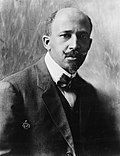 Sociologist and civil rights activist
W. E. B. Du Bois (PhD, 1895) -
![32nd President of the United States Franklin D. Roosevelt (AB, 1903)[117]](https://upload.wikimedia.org/wikipedia/commons/thumb/4/42/Franklin_D._Roosevelt_-_Portrait_by_Jacob_H._Perskie.png/120px-Franklin_D._Roosevelt_-_Portrait_by_Jacob_H._Perskie.png) 32nd President of the United States Franklin D. Roosevelt (AB, 1903)[117]
32nd President of the United States Franklin D. Roosevelt (AB, 1903)[117] -
 Author, political activist, and lecturer Helen Keller (AB, 1904, Radcliffe College)
 -
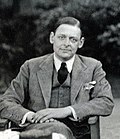 Poet and Nobel laureate in literature T. S. Eliot (AB, 1909; AM, 1910)
 -
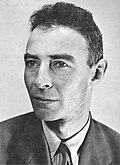 Physicist and leader of Manhattan Project J. Robert Oppenheimer (AB, 1925)
 -
 Economist and Nobel laureate in economics Paul Samuelson (AM, 1936; PhD, 1941)
 -
 Musician and composer Leonard Bernstein (AB, 1939)
 -
![35th President of the United States John F. Kennedy (AB, 1940)[118]](https://upload.wikimedia.org/wikipedia/commons/thumb/c/c3/John_F._Kennedy%2C_White_House_color_photo_portrait.jpg/120px-John_F._Kennedy%2C_White_House_color_photo_portrait.jpg) 35th President of the United States John F. Kennedy (AB, 1940)[118]
35th President of the United States John F. Kennedy (AB, 1940)[118] -
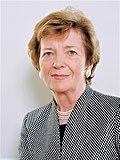 7th President of Ireland and United Nations High Commissioner for Human Rights Mary Robinson (LLM, 1968)
 -
 45th Vice President of the United States and Nobel Peace Prize laureate Al Gore (AB, 1969)
 -
![24th President of Liberia and Nobel Peace Prize laureate Ellen Johnson Sirleaf (MPA, 1971)[119]](https://upload.wikimedia.org/wikipedia/commons/thumb/4/4e/Ellen_Johnson-Sirleaf%2C_April_2010.jpg/120px-Ellen_Johnson-Sirleaf%2C_April_2010.jpg) 24th President of Liberia and Nobel Peace Prize laureate Ellen Johnson Sirleaf (MPA, 1971)[119]
24th President of Liberia and Nobel Peace Prize laureate Ellen Johnson Sirleaf (MPA, 1971)[119] -
 Senate Majority Leader Chuck Schumer (AB, 1971; JD, 1975)
 -
 11th Prime Minister of Pakistan Benazir Bhutto (AB, 1973, Radcliffe College)
 -
 14th Chair of the Federal Reserve Ben Bernanke (AB, 1975; AM, 1975)
 -
![43rd President of the United States George W. Bush (MBA, 1975)[120]](https://upload.wikimedia.org/wikipedia/commons/thumb/d/d4/George-W-Bush.jpeg/120px-George-W-Bush.jpeg) 43rd President of the United States George W. Bush (MBA, 1975)[120]
43rd President of the United States George W. Bush (MBA, 1975)[120] -
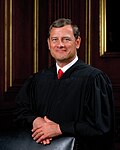 17th Chief Justice of the United States John Roberts (AB, 1976; JD, 1979)
 -
![Founder of Microsoft and philanthropist Bill Gates (College, 1977;[a 1] LLD hc, 2007)](https://upload.wikimedia.org/wikipedia/commons/thumb/1/19/Bill_Gates_June_2015.jpg/120px-Bill_Gates_June_2015.jpg)
-
 8th Secretary-General of the United Nations Ban Ki-moon (MPA, 1984)
 -
 Associate Justice of the Supreme Court of the United States Elena Kagan (JD, 1986)
 -
 Former First Lady of the United States Michelle Obama (JD, 1988)
 -
![Biochemist and Nobel laureate in chemistry Jennifer Doudna (PhD, 1989)[121]](https://upload.wikimedia.org/wikipedia/commons/thumb/5/5d/Professor_Jennifer_Doudna_ForMemRS.jpg/120px-Professor_Jennifer_Doudna_ForMemRS.jpg) Biochemist and Nobel laureate in chemistry Jennifer Doudna (PhD, 1989)[121]
Biochemist and Nobel laureate in chemistry Jennifer Doudna (PhD, 1989)[121] -
![44th President of the United States and Nobel Peace Prize laureate Barack Obama (JD, 1991)[122][123]](https://upload.wikimedia.org/wikipedia/commons/thumb/e/e9/Official_portrait_of_Barack_Obama.jpg/120px-Official_portrait_of_Barack_Obama.jpg) 44th President of the United States and Nobel Peace Prize laureate Barack Obama (JD, 1991)[122][123]
44th President of the United States and Nobel Peace Prize laureate Barack Obama (JD, 1991)[122][123] -
 Associate Justice-designate of the Supreme Court of the United States Ketanji Brown Jackson (JD, 1992)
![2nd President of the United States John Adams (AB, 1755; AM, 1758)[112]](/wiki/File:US_Navy_031029-N-6236G-001_A_painting_of_President_John_Adams_(1735-1826),_2nd_president_of_the_United_States,_by_Asher_B._Durand_(1767-1845)-crop.jpg)
![6th President of the United States John Quincy Adams (AB, 1787; AM, 1790)[113][114]](/wiki/File:John_Quincy_Adams.jpg)


![19th President of the United States Rutherford B. Hayes (LLB, 1845)[115]](/wiki/File:President_Rutherford_Hayes_1870_-_1880_Restored.jpg)


![26th President of the United States and Nobel Peace Prize laureate Theodore Roosevelt (AB, 1880)[116]](/wiki/File:President_Theodore_Roosevelt,_1904.jpg)

![32nd President of the United States Franklin D. Roosevelt (AB, 1903)[117]](/wiki/File:Franklin_D._Roosevelt_-_Portrait_by_Jacob_H._Perskie.png)

.jpg)


![35th President of the United States John F. Kennedy (AB, 1940)[118]](/wiki/File:John_F._Kennedy,_White_House_color_photo_portrait.jpg)
.jpg)

![24th President of Liberia and Nobel Peace Prize laureate Ellen Johnson Sirleaf (MPA, 1971)[119]](/wiki/File:Ellen_Johnson-Sirleaf,_April_2010.jpg)


![43rd President of the United States George W. Bush (MBA, 1975)[120]](/wiki/File:George-W-Bush.jpeg)

![Founder of Microsoft and philanthropist Bill Gates (College, 1977;[a 1] LLD hc, 2007)](/wiki/File:Bill_Gates_June_2015.jpg)


![Biochemist and Nobel laureate in chemistry Jennifer Doudna (PhD, 1989)[121]](/wiki/File:Professor_Jennifer_Doudna_ForMemRS.jpg)
![44th President of the United States and Nobel Peace Prize laureate Barack Obama (JD, 1991)[122][123]](/wiki/File:Official_portrait_of_Barack_Obama.jpg)
.jpeg)


_(cropped).jpg)
- ↑ *Making Harvard Modern: The Rise of America's University{{#if:|, {{{last}}}}. Oxford University Press(2001). ISBN 0-19-514457-0
- How Harvard Rules: Reason in the Service of Empire{{#if:Spaulding|, Spaulding}. South End Press(1989). ISBN 0-89608-284-9
- Harvard, MIT Ranked Most Prestigious Universities, Study Reports. Bloomberg(March 9, 2011). Retrieved March 1, 2012.
- Collier's Encyclopedia{{#if:|, {{{last}}}}. Macmillan Educational Co.(1986)
- Harvard Number One University in Eyes of Public Stanford and Yale in second place, Newport, Frank. Gallup(August 26, 2003). Retrieved October 9, 2013.
- Ending Early Admissions: Guess Who Wins?. The New York Times(September 17, 2006). Retrieved March 27, 2020.
- We Can't Eat Prestige: The Women Who Organized Harvard{{#if:|, {{{last}}}}. Temple University Press(1997). ISBN 9781566395359
- Template:Cite magazine
- ↑ Harvard and the Boston Brahmins: A Study in Institutional and Class Development, 1800–1865. Journal of Social History({Template:Year).
- ↑ Elite Families: Class and Power in Nineteenth-Century Boston{{#if:Farrell|, Farrell}. State University of New York Press(1993). ISBN 0-7914-1593-7
- ↑ 4.0 4.1 Member Institutions and years of Admission. Association of American Universities. Retrieved August 28, 2010.
- ↑ Faculties and Allied Institutions. Office of the Provost, Harvard University. Retrieved August 27, 2010.
- ↑ 6.0 6.1 Faculties and Allied Institutions. Office of the Provost, Harvard University. Retrieved June 15, 2013.
- ↑ 7.0 7.1 Cite error: Invalid
<ref>tag; no text was provided for refs namedEndowment - ↑ What Harvard Actually Costs. Investopedia. Retrieved July 30, 2020.
- ↑ 9.0 9.1 Harvard Library Annual Report FY 2013. Harvard University Library(2013). Retrieved January 3, 2015.
- ↑ 10.0 10.1 10.2 The Nation's Largest Libraries: A Listing By Volumes Held. American Library Association(May 2009). Retrieved August 19, 2009.
- ↑ 11.0 11.1 Quick Facts. Retrieved December 12, 2019.
- ↑
- Universities all adopt different metrics to claim Nobel or other academic award affiliates, some generous while others conservative. The official Harvard count (around 40) only includes academicians affiliated at the time of winning the prize. Yet, the figure can be up to some 160 laureates if visitors and professors of various ranks are all included (the most generous criterium), as what some other universities do.
- 50 (US) Universities with the Most Nobel Prize Winners. www.bestmastersprograms.org. Retrieved October 1, 2021.
- Where MacArthur 'Geniuses' Went to College. businessinsider.com(May 29, 2015). Retrieved November 5, 2020.
- Top Producers. us.fulbrightonline.org. Retrieved November 4, 2020.
- Statistics. www.marshallscholarship.org. Retrieved November 2, 2020.
- US Rhodes Scholars Over Time. www.rhodeshouse.ox.ac.uk. Retrieved November 23, 2020.
- Harvard, Stanford, Yale Graduate Most Members of Congress. Retrieved November 12, 2020.
- The complete list of Fields Medal winners(2014). Retrieved September 10, 2015.
- ↑ The Founding of Harvard College{{#if:|, {{{last}}}}. Harvard University Press(1968). ISBN 978-0-674-31450-4
- ↑ The instrument behind New England's first literary flowering. Harvard University(March 8, 2012). Retrieved January 18, 2014.
- ↑ Rowley and Ezekiel Rogers, The First North American Printing Press. Maritime Historical Studies Centre, University of Hull. Retrieved January 18, 2014.
- ↑ John Harvard Facts, Information.. The Columbia Encyclopedia, Sixth Edition. 2008. Retrieved July 17, 2009.
- ↑ The Cultural Life of the American Colonies{{#if:Wright|, Wright}(2002). ISBN 978-0-486-42223-7
- ↑ British Colonial America: People and Perspectives{{#if:|, {{{last}}}}. ABC-CLIO(2008). ISBN 978-1-59884-025-4
- ↑ Harvard guide intro. Harvard University(July 26, 2007). Retrieved August 29, 2010.
- ↑ John Leverett – History – Office of the President Template:Webarchive
- ↑ 21.0 21.1 The Making of American Liberal Theology: Imagining Progressive Religion, 1805-1900{{#if:Dorrien|, Dorrien}. Westminster John Knox Press(January 1, 2001). ISBN 978-0-664-22354-0
- ↑ Ralph Waldo Emerson: The Making of a Democratic Intellectual{{#if:Field|, Field}. Rowman & Littlefield(2003). ISBN 978-0-8476-8843-2
- ↑ The Theological Roots of Charles W. Eliot's Educational Reforms. Journal of Unitarian Universalist History({Template:Year).
- ↑ An Iconic College View: Harvard University, circa 1900. Richard Rummell (1848-1924). An Iconic College View. Retrieved January 24, 2022.
- ↑ The Chosen: The Hidden History of Admission and Exclusion at Harvard, Yale, and Princeton{{#if:|, {{{last}}}}(2006). ISBN 978-0-618-77355-8
- ↑ How Jewish Quotas Began. Commentary({Template:Date).
- ↑ Yale's Limit on Jewish Enrollment Lasted Until Early 1960's Book Says. The New York Times(March 4, 1986). Retrieved December 3, 2017.
- ↑ Lowell Tells Jews Limits at Colleges Might Help Them. The New York Times(June 17, 1922). Retrieved September 10, 2017.
- ↑ Anita Fay Kravitz, "The Harvard Report of 1945: An historical ethnography", Ph.D. dissertation, University of Pennsylvania, 1994, 367 pages; AAT 9427558
- ↑ Malka A. Older. (1996). Preparatory schools and the admissions process Template:Webarchive. The Harvard Crimson, January 24, 1996
- ↑ An update on Harvard's diversity, inclusion efforts. The Harvard Gazette(October 1, 2018). Retrieved December 14, 2019.
- ↑ Legacy and Athlete Preferences at Harvard. Journal of Labor Economics({Template:Date).
- ↑ Yards and Gates: Gender in Harvard and Radcliffe History{{#if:Schwager|, Schwager}. Palgrave Macmillan(2004). ISBN 1-4039-6098-4
- ↑ Template:Cite report
- ↑ Template:Cite report
- ↑ Harvard Board Names First Woman President. NBC News({Template:Date).
- ↑ Harvard University names Lawrence Bacow its 29th president. Fox News(February 11, 2018). Retrieved February 15, 2018.
- ↑ The Houses. Harvard College Dean of Students Office. Retrieved December 13, 2019.
- ↑ Radcliffe Institute for Advanced Study at Harvard University. Radcliffe Institute for Advanced Study at Harvard University. Retrieved January 24, 2022.
- ↑ Institutional Ownership Map – Cambridge Massachusetts. Retrieved September 8, 2016.
- ↑ Harvard Purchases Doubletree Hotel Building – News – The Harvard Crimson. www.thecrimson.com. Retrieved September 8, 2016.
- ↑ Harvard continues its march into Allston, with science complex, Logan, Tim. BostonGlobe.com(April 13, 2016). Retrieved January 24, 2022.
- ↑ Allston Planning and Development / Office of the Executive Vice President. Harvard University. Retrieved September 7, 2016.
- ↑ Harvard unveils big campus expansion. Reuters(January 21, 2007). Retrieved January 24, 2022.
- ↑ SEAS moves opening of Science and Engineering Complex to spring semester '21. The Harvard Gazette(April 10, 2020). Retrieved May 14, 2020.
- ↑ Our Campus. Retrieved December 20, 2019.
- ↑ Concord Field Station. mcz.harvard.edu. Harvard University. Retrieved March 4, 2017.
- ↑ Villa I Tatti: The Harvard University Center for Italian Renaissance Studies. Itatti.it. Retrieved June 30, 2010.
- ↑ Shanghai Center. Harvard.edu. Retrieved January 3, 2014.
- ↑ Harvard A to Z{{#if:|, {{{last}}}}. Harvard University Press(2009). ISBN 978-0-674-02089-4
- ↑ Burlington Free Press, June 24, 2009, page 11B, ""Harvard to cut 275 jobs" Associated Press
- ↑ Harvard University Fact Book 2009–2010{{#if:Office of Institutional Research|, Office of Institutional Research}(2009) ("Faculty")
- ↑ Residents Protest Vacancies in Allston. Harvard Crimson(March 5, 2009). Retrieved February 10, 2011.
- ↑ Template:Cite magazine
- ↑ Harvard endowment leads others down. The Boston Globe(January 28, 2010). Retrieved September 2, 2010.
- ↑ [{{{url}}} Harvard Hit by Loss as Crisis Spreads to Colleges]. The Wall Street Journal(December 4, 2008).
- ↑ Template:Cite magazine
- ↑ Understanding Endowments, Part I. Forbes(March 4, 2009). Retrieved August 29, 2010.
- ↑ A Singular Mission. Retrieved December 14, 2019.
- ↑ Admissions Cuts Concern Some Graduate Students. Retrieved December 14, 2019.
- ↑ Financial Report. Retrieved December 14, 2019.
- ↑ Template:Cite magazine
- ↑ Harvard Prison Divestment Campaign Delivers Report to Mass. Hall. The Harvard Crimson(October 22, 2019). Retrieved December 15, 2019.
- ↑ 64.0 64.1 Students Protest Investment in Apartheid South Africa. The Harvard Crimson(May 23, 2012). Retrieved July 27, 2015.
- ↑ Harvard University community campaigns for divestment from apartheid South Africa, 1977–1989, Cadambi, Anjali. Global Nonviolent Action Database(September 19, 2010). Retrieved July 27, 2015.
- ↑ Historical Dictionary of United States-Africa Relations{{#if:|, {{{last}}}}. Scarecrow Press(March 20, 2009). ISBN 978-0-8108-6291-3
- ↑ A Brief History of Harvard College. Harvard College. Retrieved July 25, 2011.
- ↑ 68.0 68.1 68.2 Carnegie Classifications – Harvard University. The Carnegie Foundation for the Advancement of Teaching. Retrieved August 28, 2010.
- ↑ 69.0 69.1 Liberal Arts & Sciences. Harvard College. Retrieved December 12, 2019.
- ↑ Degree Programs. Retrieved August 28, 2010.
- ↑ 71.0 71.1 Degrees Awarded. Office of Institutional Research, Harvard University. Retrieved December 13, 2019.
- ↑ The Bachelor of Arts and Bachelor of Science Degrees. Harvard College. Retrieved December 8, 2019.
- ↑ Academic Information: The Concentration Requirement. Harvard College. Retrieved August 28, 2010.
- ↑ How large are classes?. Harvard College. Retrieved December 14, 2019.
- ↑ Member Institutions and Years of Admission. Association of American Universities. Retrieved September 15, 2013.
- ↑ Template:Cite magazine
- ↑ Research at Harvard Medical School. Harvard Medical School. Retrieved December 9, 2019.
- ↑ Which schools get the most research money?. U.S. News & World Report. Retrieved March 30, 2020.
- ↑ Cite error: Invalid
<ref>tag; no text was provided for refs namedglance - ↑ Harvard University's Graduate School Rankings. U.S. News & World Report. Retrieved April 27, 2020.
- ↑ Template:Cite magazine
- ↑ Academic Ranking of World Universities——Harvard University Ranking Profile. Shanghai Ranking Consultancy. Retrieved July 29, 2018.
- ↑ Template:Cite magazine
- ↑ SCImago Institutions Rankings – Higher Education – All Regions and Countries – 2019 – Overall Rank. www.scimagoir.com. Retrieved June 11, 2019.
- ↑ The Top American Research Universities: 2019 Annual Report. mup.umass.edu(2020). Retrieved July 17, 2021.
- ↑ Massachusetts Institutions – NECHE. New England Commission of Higher Education.
- ↑ World Ranking. University Ranking by Academic Performance. Retrieved January 22, 2020.
- ↑ College Hopes & Worries Press Release. Retrieved September 7, 2016.
- ↑ Princeton Review's 2012 "College Hopes & Worries Survey" Reports on 10,650 Students' & Parents' Top 10 "Dream Colleges" and Application Perspectives. Retrieved December 10, 2019.
- ↑ 2019 College Hopes & Worries Press Release. Retrieved December 10, 2019.
- ↑ Harvard is #3 in World University Engineering Rankings. Retrieved December 10, 2019.
- ↑ 2021 Best National University Rankings. US News and World Report(August 31, 2021). Retrieved August 31, 2021.
- ↑ 2022 Best Graduate Schools. US News and World Report(August 31, 2021). Retrieved August 31, 2021.
- ↑ 2022 Best Graduate Schools. US News and World Report(August 31, 2021). Retrieved August 31, 2021.
- ↑ 2022 Best Graduate Schools. US News and World Report(August 31, 2021). Retrieved August 31, 2021.
- ↑ 2022 Best Graduate Schools. US News and World Report(August 31, 2021). Retrieved August 31, 2021.
- ↑ 2022 Best Graduate Schools. US News and World Report(August 31, 2021). Retrieved August 31, 2021.
- ↑ 2022 Best Graduate Schools. US News and World Report(August 31, 2021). Retrieved September 13, 2021.
- ↑ 2022 Best Graduate Schools. US News and World Report(August 31, 2021). Retrieved August 31, 2021.
- ↑ College Scorecard: Harvard University. United States Department of Education. Retrieved May 8, 2022.
- ↑ a) Law School Student Government [1] Template:Webarchive
b) School of Education Student Council [2]
c) Kennedy School Student Government [3] Template:Webarchive
d) Design School Student Forum [4] Template:Webarchive
e) Student Council of Harvard Medical School and Harvard School of Dental Medicine [5] Template:Webarchive - ↑ Harvard : Women's Rugby Becomes 42nd Varsity Sport at Harvard University. Gocrimson.com(August 9, 2012). Retrieved July 5, 2013.
- ↑ Yale and Harvard Defeat Oxford/Cambridge Team. Yale University Athletics. Retrieved September 13, 2011.
- ↑ The Harvard Guide: Financial Aid at Harvard. Harvard University(September 2, 2006). Retrieved August 29, 2010.
- ↑ A game unlike any other, Bracken, Chris. yaledailynews.com(November 17, 2017). Retrieved September 9, 2020.
- ↑ 2020 Rhodes, Mitchell Scholars named. harvard.edu(November 23, 2020). Retrieved November 25, 2020.
- ↑ Five Harvard students named Rhodes Scholars. The Harvard Gazette(November 24, 2019). Retrieved November 24, 2019.
- ↑ More billionaires went to Harvard than to Stanford, MIT and Yale combined. CNBC(May 18, 2018). Retrieved October 1, 2019.
- ↑ Statistics. www.marshallscholarship.org. Retrieved December 1, 2015.
- ↑ Pulitzer Prize Winners. Harvard University. Retrieved February 2, 2018.
- ↑ Companies – Entrepreneurship – Harvard Business School. entrepreneurship.hbs.edu. Retrieved March 28, 2019.
- ↑ The Education of John Adams. Massachusetts Historical Society. Retrieved 20 September 2020.
- ↑ John Quincy Adams. The White House. Retrieved 21 September 2020.
- ↑ John Quincy Adams: Life Before the Presidency. Miller Center(October 4, 2016). Retrieved 21 September 2020.
- ↑ HLS's first alumnus elected as President—Rutherford B. Hayes. Harvard Law Today. Retrieved 21 September 2020.
- ↑ Theodore Roosevelt - Biographical. Nobel Foundation. Retrieved 21 September 2020.
- ↑ Franklin D. Roosevelt: Life Before the Presidency. Miller Center(October 4, 2016). Retrieved 21 September 2020.
- ↑ John F. Kennedy: Life Before the Presidency. Miller Center(October 4, 2016). Retrieved 21 September 2020.
- ↑ Ellen Johnson Sirleaf - Biographical. www.nobelprize.org. Retrieved October 14, 2020.
- ↑ George W. Bush: Life Before the Presidency. Miller Center(October 4, 2016). Retrieved 21 September 2020.
- ↑ Press release: The Nobel Prize in Chemistry 2020. nobelprize.org. Nobel Foundation. Retrieved October 14, 2020.
- ↑ Barack Obama: Life Before the Presidency. Miller Center(October 4, 2016). Retrieved 21 September 2020.
- ↑ Barack H. Obama - Biographical. Nobel Foundation. Retrieved 21 September 2020.
Faculty
- Notable present and past Harvard faculty include:


.jpg)


.jpg)

.jpg)


.png)

Literature and popular culture

The perception of Harvard as a center of either elite achievement, or elitist privilege, has made it a frequent literary and cinematic backdrop. "In the grammar of film, Harvard has come to mean both tradition, and a certain amount of stuffiness," film critic Paul Sherman has said.[1]
Literature
- The Sound and the Fury (1929) and Absalom, Absalom! (1936) by William Faulkner both depict Harvard student life.Template:Secondary source needed
- Of Time and the River (1935) by Thomas Wolfe is a fictionalized autobiography that includes his alter ego's time at Harvard.Template:Secondary source needed
- The Late George Apley (1937) by John P. Marquand parodies Harvard men at the opening of the 20th century;Template:Secondary source needed it won the Pulitzer Prize.
- The Second Happiest Day (1953) by John P. Marquand Jr. portrays the Harvard of the World War II generation.Template:RefnTemplate:RefnTemplate:RefnTemplate:RefnTemplate:Refn
Film
Harvard's policy since 1970 (after the damage caused by Love Story) has been to permit filming on its property only rarely, so most scenes set at Harvard (especially indoor shots, but excepting aerial footage and shots of public areas such as Harvard Square) are in fact shot elsewhere.[2][3]
- Love Story (1970) concerns a romance between a wealthy Harvard hockey player (Ryan O'Neal) and a brilliant Radcliffe student of modest means (Ali MacGraw): it is screened annually for incoming freshmen.[4]Template:RefnTemplate:Refn
- The Paper Chase (1973)Template:Refn
- A Small Circle of Friends (1980)[2]
- Prozac Nation (2001) is a psychological drama about a 19-year-old Harvard student with atypical depression.
See also
- 2012 Harvard cheating scandal
- Academic regalia of Harvard University
- Gore Hall
- Harvard College social clubs
- Harvard University Police Department
- Harvard University Press
- Harvard/MIT Cooperative Society
- I, Too, Am Harvard
- List of oldest universities in continuous operation
- List of Nobel laureates affiliated with Harvard University
- Outline of Harvard University
- Secret Court of 1920
Notes
References
- ↑ 'Social Network' taps other campuses for Harvard role. Boston.com(September 24, 2010). Retrieved February 20, 2020.
- ↑ 2.0 2.1 University, Hollywood Relationship Not Always a 'Love Story'. Harvard Crimson(September 21, 1999). Retrieved September 15, 2013.
- ↑ 'Social Network' taps other campuses for Harvard role. boston.com(September 24, 2010). Retrieved February 20, 2020.
- ↑ Never Having To Say You're Sorry for 25 Years.... Harvard Crimson(June 3, 1996). Retrieved September 15, 2013.
Bibliography
- Abelmann, Walter H., ed. The Harvard-MIT Division of Health Sciences and Technology: The First 25 Years, 1970–1995 (2004). 346 pp.
- Beecher, Henry K. and Altschule, Mark D. Medicine at Harvard: The First 300 Years (1977). 569 pp.
- Bentinck-Smith, William, ed. The Harvard Book: Selections from Three Centuries (2d ed.1982). 499 pp.
- Bethell, John T.; Hunt, Richard M.; and Shenton, Robert. Harvard A to Z (2004). 396 pp. excerpt and text search
- Bethell, John T. Harvard Observed: An Illustrated History of the University in the Twentieth Century, Harvard University Press, 1998, Template:ISBN
- Bunting, Bainbridge. Harvard: An Architectural History (1985). 350 pp.
- Carpenter, Kenneth E. The First 350 Years of the Harvard University Library: Description of an Exhibition (1986). 216 pp.
- Cuno, James et al. Harvard's Art Museums: 100 Years of Collecting (1996). 364 pp.
- Elliott, Clark A. and Rossiter, Margaret W., eds. Science at Harvard University: Historical Perspectives (1992). 380 pp.
- Hall, Max. Harvard University Press: A History (1986). 257 pp.
- Hay, Ida. Science in the Pleasure Ground: A History of the Arnold Arboretum (1995). 349 pp.
- Hoerr, John, We Can't Eat Prestige: The Women Who Organized Harvard; Temple University Press, 1997, Template:ISBN
- Howells, Dorothy Elia. A Century to Celebrate: Radcliffe College, 1879–1979 (1978). 152 pp.
- Keller, Morton, and Phyllis Keller. Making Harvard Modern: The Rise of America's University (2001), major history covers 1933 to 2002 online edition
- Lewis, Harry R. Excellence Without a Soul: How a Great University Forgot Education (2006) Template:ISBN
- Morison, Samuel Eliot. Three Centuries of Harvard, 1636–1936 (1986) 512pp; excerpt and text search
- Powell, Arthur G. The Uncertain Profession: Harvard and the Search for Educational Authority (1980). 341 pp.
- Reid, Robert. Year One: An Intimate Look inside Harvard Business School (1994). 331 pp.
- Rosovsky, Henry. The University: An Owner's Manual (1991). 312 pp.
- Rosovsky, Nitza. The Jewish Experience at Harvard and Radcliffe (1986). 108 pp.
- Seligman, Joel. The High Citadel: The Influence of Harvard Law School (1978). 262 pp.
- Sollors, Werner; Titcomb, Caldwell; and Underwood, Thomas A., eds. Blacks at Harvard: A Documentary History of African-American Experience at Harvard and Radcliffe (1993). 548 pp.
- Trumpbour, John, ed., How Harvard Rules. Reason in the Service of Empire, Boston: South End Press, 1989, Template:ISBN
- Ulrich, Laurel Thatcher, ed., Yards and Gates: Gender in Harvard and Radcliffe History, New York: Palgrave Macmillan, 2004. 337 pp.
- Winsor, Mary P. Reading the Shape of Nature: Comparative Zoology at the Agassiz Museum (1991). 324 pp.
- Wright, Conrad Edick. Revolutionary Generation: Harvard Men and the Consequences of Independence (2005). 298 pp.
External links
Template:Sister project links Template:Scholia
Template:Harvard
Template:Navboxes
Template:Authority control
Cite error: <ref> tags exist for a group named "a", but no corresponding <references group="a"/> tag was found