







Template:Infobox official post
The Jathedar of the Akal Takht (Template:Lang-pa) is the head of the Akal Takht and head of the Sikhs worldwide.[1] The jathedar has the de facto power as the supreme spokesperson of the Khalsa to summon, trial and sentence any person who identifies as a Sikh from the Akal Takht.[2]
The current jathedars are the imprisoned Jagtar Singh Hawara, who was declared by the Sarbat Khalsa on 10 November 2015[3][4] and Raghbir Singh, appointed by the Shiromani Gurdwara Parbandhak Committee (SGPC) on 16 June 2023.[5] Due to the imprisonment of Hawara, Dhian Singh Mand appointed by the Sarbat Khalsa has been serving as the acting jathedar.[6] The jathedars of the five takhts generally make important decisions in consultation within the framework of the Sikh Rehat Maryada while considering the collective will of the Sikhs.[7]
The position of jathedar is not established by any constitutional document, but exists only by long-established convention, whereby a Sarbat Khalsa or an institution authorised by it appoints a person most likely to command the confidence of the Sikhs.[8] The jathedar is supported by the Shiromani Gurdwara Parbandhak Committee and heads the other four jathedars of the takhts.[9] The jathedar also commands the Akalis, an armed Sikh warrior order started from the Akal Takht by the sixth Sikh Guru, Guru Hargobind.[10]
The Akal Takht is the building directly opposite the Darbar Sahib founded by Guru Hargobind, as a symbol of political sovereignty and where spiritual and temporal concerns of the Sikh people can be addressed.[11] Along with Baba Buddha and Bhai Gurdas, the sixth Guru built a concrete slab. When Guru Hargobind revealed the platform on 15 June 1606, he put on two swords: one indicated his spiritual authority (piri) and the other, his temporal authority (miri).[12]
History and development
Title and etymology
The word jathedar is a compound of Template:Lang-pa and Template:Lang-pa, meaning leader of a people as a collective.[13] The title is used for a commander of a Sikh military unit and applies to a head of a takht.[14]
Origin
After the execution of the fifth Guru, Guru Arjan, his son and successor Guru Hargobind bearing the two swords of Template:Lang-pa and Template:Lang-pa declared himself sovereign and defied the royal edict of the Mugal empire in 1606.[15] Recognising the necessity of coordinating efforts against the Mughal empire, the Guru simultaneously began the process of militarising the Sikhs.[16] The first hukamnama issued from the Akal Takht on 30 June 1606 commanded the Sikhs to offer arms and horses.[17] The position of jathedar was established, when the Guru appointed Bhai Gurdas as the first custodian of the Akal Takht, which was then known as the Akal Bunga.[18] However, Guru Hargobind had to leave the Akal Takht in 1734 due to the hostilities of the Mughal rulers, and the institution came under the control of the Minas, descendants of Prithi Chand.[19]
Following the establishment of the Khalsa, which took effect on 13 April 1699, the tenth Guru, Guru Gobind Singh sent Bhai Mani Singh to Amritsar with instructions to take possession of the Darbar Sahib and the Akal Takht from the Minas.[20] The Sikhs assigned Bhai Mani Singh as the head granthi of Harmandir Sahib and the jathedar of the Akal Takht. After the passing of Guru Gobind Singh, the Sikh divisions accepted the common leadership and sovereignty of the head of the Akal Takht.[21]
Sarbat Khalsa
In 1733, Zakariya Khan Bahadur attempted to negotiate truce with the Sikhs by offering them a jagir, the title Nawab to their head, and unimpeded access to Amritsar. After discussion at a Sarbat Khalsa, Kapur Singh Virk was chosen head of the Sikhs and took the title of Nawab.[22] He combined the various Sikh militias into two groups; Taruna Dal for under 40 years of age and the Buddha Dal for over 40 years of age, which would collectively be known as Dal Khalsa.[23] The Taruna Dal was further divided in five jathas, each with 1300 to 2000 men and a separate drum and banner.[24] Considering Hari ke Pattan, where the Sutlej and Beas rivers meet as a reference point, the Taruna Dal was assigned to control the eastern area while the Buddha Dal controlled the west.[25]
On 23 March 1748, a Sarbat Khalsa appointed Jassa Singh Ahluwalia to take the command of Dal Khalsa and become the head of the Sikhs.[26] Ahluwalia proclaimed the title of Sultan-ul-Qaum when the Sikhs under his leadership defeated the Afghan forces of Ahmad Shah Abdali and took Lahore without resistance in September 1761.[27] The 40,000 allied forces of Baghel Singh, Jassa Singh Ahluwalia and Jassa Singh Ramgarhia conquered the Red Fort in Delhi and hoisted the Nishan Sahib atop on 11 March 1783. The condition of their retreat included the construction of seven gurdwaras marking Sikh historical sites in Delhi.[28]
Dispute
A Sarbat Khalsa convened by Sikh organisations opposed to the influence of Shiromani Akali Dal over Sikh religious institutions in 2015 appointed Jagtar Singh Hawara as the Jathedar of Akal Takht. The SGPC president at that time, Avtar Singh Makkar, however condemned the convening as against the principles of Sikhism and it's decisions null and void. He added that the removal of Jathedars came under Sikh Gurdwaras Act, 1925 and no one could challenge the authority of the SGPC.[29] Giani Gurbachan Singh continued to remain in his post until his resignation on 18 October 2018. On 23 October, the SGPC appointed Giani Harpreet Singh as the acting jathedar of Akal Takht.[30]
Qualifications and selection

The jathedar serves at the Khalsa’s pleasure, meaning the post does not have a fixed term, and once appointed, the jathedar remains in service until they resign, are dismissed, or die.
Chapter IV, Article V of the Sikh Rehat Maryada only permits an initiated Sikh to enter the hallowed enclosures of a takht; therefore, only a Khalsa Sikh of high regard can become a jathedar. [31] Prior to 1921, jathedars were appointed by the Sarbat Khalsa, a biannual deliberative assembly of the Sikhs held at Amritsar.[32] Since 1921, the jathedar of takhts have generally been appointed by the Shiromani Gurdwara Parbandhak Committee.[33]
Role and authority
Chapter XIII, Article XXVII of the Sikh Rehat Maryada allows for an appeal against a local decision concerning the Sikhs to be made to the Akal Takht.[31] The jathedar of the Akal Takht has the de facto power to summoned Sikhs including those who hold a position of authority to be trialed.[34] Hukamnamas issued by the jathedar from the Akal Takht which are binding may order an acquittal, penalty or excommunication.[35] The Khalsa can hold individuals accountable for violating the decisions of the Akal Takht.[36]
List
- Colour key
Template:Legend2 Template:Legend2 Template:Legend2 Template:Legend2 Template:Legend2


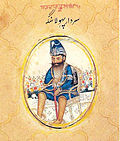
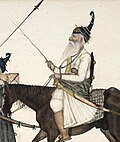
_of_Akali-Nihang_warriors_on_the_march,_Company_School,_ca.1860.jpg)
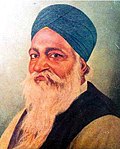
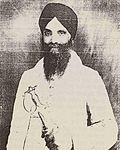
_and_attendants,_Company_School,_ca.1885.jpg)


Timeline of jathedars
The following timeline depicts the progression of the jathedars.
- Jathedar of the Akal Takht
ImageSize = width:1200 height:auto barincrement:18 PlotArea = top:10 bottom:20 right:130 left:10 AlignBars = late DateFormat = x.y Period = from:1604 till:2027.1666666667 TimeAxis = orientation:horizontal ScaleMajor = unit:year increment:10 start:1606 ScaleMinor = unit:year increment:1 start:1605
Define $now = 2026.5833333333
Colors =
 id:Guru value:rgb(0.9, 0.9, 0.9)
 id:sarbatkhalsa value:rgb(1, 0.6, 0)
 id:buddhadal value:blue
 id:british value:red
 id:SGPC value:rgb(0.1, 0.5, 1)
BarData =
 barset:JathedarLine
 barset:Jathedars
 #barset:blankline
 bar:Akarpuri
 bar:Nagoke
 bar:Acchar
 bar:Didar
 bar:Jawaher
 bar:Musafir
 bar:Dadehar
 bar:Mohan
 bar:Partap
 bar:Tur
 bar:Bhaura
 bar:Kirpal
 bar:Ajnoha
 bar:Rode
 bar:Kaunke
 bar:Manochahal
 bar:Darshan
 bar:Manjit
 bar:Ranjit
 bar:Puran
 bar:Vadanti
 bar:Gurbachan
 bar:Hawara
 bar:Mand
 bar:Harpreet
 bar:Raghbir
PlotData=
width:1 align:right fontsize:S shift:(-3,-4) anchor:from fontsize:8 color:black
barset:JathedarLine
from:1630 till:end text:Jathedars
width:6 align:left fontsize:S shift:(5,-4) anchor:till fontsize:10
barset:Jathedars
from:1606 till:1637 color:guru text:"Gurdas Bhalla"
from:1699 till:1737 color:guru text:"Mani Singh"
from:1722 till:1734 color:sarbatkhalsa text:"Darbara Singh"
from:1734 till:1748 color:sarbatkhalsa text:"Kapur Singh Virk"
from:1748 till:1783 color:sarbatkhalsa text:"Jassa Singh Ahluwalia"
from:1800 till:1823 color:sarbatkhalsa text:"Phula Singh"
from:1823 till:1846 color:buddhadal text:"Hanuman Singh"
from:1846 till:1865 color:buddhadal text:"Prahlad Singh"
from:1865 till:1907 color:buddhadal text:"Gian Singh Deol"
from:1907 till:1920 color:british text:"Arur Singh Naushehra"
from:1920 till:1921 color:sarbatkhalsa text:"Teja Singh Bhuchar"
bar:Akarpuri
from:1921 till:1923 color:SGPC
from:1926 till:1930 color:SGPC text:"Teja Singh Akarpuri"
bar:Nagoke
from:1923 till:1924 color:SGPC
from:1926 till:1926 color:SGPC text:"Udham Singh Nagoke"
bar:Acchar
from:1924 till:1926 color:SGPC
from:1955 till:1962 color:SGPC text:"Acchar Singh"
bar:Didar
from:1925 till:1925 color:SGPC text:"Didar Singh"
bar:Jawaher
from:1926 till:1926 color:SGPC text:"Jawaher Singh Mattu Bhaike"
bar:Musafir
from:1931 till:1934 color:SGPC text:"Gurmukh Singh Musafir"
bar:Dadehar
from:1934 till:1934 color:SGPC text:"Wasakha Singh Dadehar"
bar:Mohan
from:1935 till:1952 color:SGPC text:"Mohan Singh Nagoke"
bar:Partap
from:1938 till:1948 color:SGPC
from:1952 till:1954 color:SGPC text:"Partap Singh"
bar:Tur
from:1962 till:1963 color:SGPC text:"Mohan Singh Tur"
bar:Bhaura
from:1964 till:1980 color:SGPC text:"Sadhu Singh Bhaura"
bar:Kirpal
from:1963 till:1965 color:SGPC
from:1983 till:1986 color:SGPC text:"Kirpal Singh"
bar:Ajnoha
from:1980 till:1983 color:SGPC text:"Gurdial Singh Ajnoha"
bar:Rode
from:1986 till:1989 color:sarbatkhalsa text:"Jasbir Singh Rode"
bar:Kaunke
from:1986 till:1993 color:sarbatkhalsa text:"Gurdev Singh Kaunke"
bar:Manochahal
from:1986 till:1987 color:sarbatkhalsa text:"Gurbachan Singh Manochahal"
bar:Darshan
from:1986 till:1988 color:SGPC
from:1989 till:1990 color:SGPC text:"Darshan Singh"
bar:Manjit
from:1994 till:1997 color:SGPC text:"Manjit Singh"
bar:Ranjit
from:1994 till:1999 color:SGPC text:"Ranjit Singh"
bar:Puran
from:1999 till:2000 color:SGPC text:"Puran Singh"
bar:Vadanti
from:2000 till:2008 color:SGPC text:"Joginder Singh Vadanti"
bar:Gurbachan
from:2008 till:2018 color:SGPC text:"Gurbachan Singh"
bar:Hawara
from:2015 till:$now color:sarbatkhalsa text:"Jagtar Singh Hawara"
bar:Mand
from:2015 till:$now color:sarbatkhalsa text:"Dhian Singh Mand"
bar:Harpreet
from:2018 till:2023 color:sgpc text:"Harpreet Singh"
bar:Raghbir
from:2023 till:$now color:sgpc text:"Raghbir Singh"
LineData=
#These are the colored bars of the Legend:
atpos:121 from:1615 till:1618 color:guru
atpos:108 from:1615 till:1618 color:sarbatkhalsa
atpos:95 from:1615 till:1618 color:buddhadal
atpos:82 from:1615 till:1618 color:british
atpos:69 from:1615 till:1618 color:sgpc
TextData=
#This is the text of the Legend
pos:(54,130)
text:"Guru"
text:"Sarbat Khalsa"
text:"Buddha Dal"
text:"British Indian Government"
text:"Shiromani Gurdwara Parbandhak Committee"
</timeline>
Notes
References
- ↑ Sikh Shrines in India{{#if:|, {{{last}}}}. Publications Division Ministry of Information & Broadcasting(February 1990). ISBN 978-81-230-2260-4
- ↑ Akal Takht excommunicates Sucha Singh Langah without a hearing(6 October 2017). Retrieved 10 November 2022.
- ↑ The Tribune, Chandigarh, India - Main News.
- ↑ Sarbat Khalsa appoints Jagtar Singh Hawara as Akal Takht jathedar. Hindustan Times(2015-11-10). Retrieved 2023-05-11.
- ↑ ਰਘਬੀਰ ਸਿੰਘ ਨੂੰ ਐਲਾਨਿਆ ਗਿਆ ਸ੍ਰੀ ਅਕਾਲ ਤਖ਼ਤ ਸਾਹਿਬ ਦਾ ਨਵਾਂ ਜਥੇਦਾਰ. Pro Punjab Tv(16 June 2023). Retrieved 16 June 2023.
- ↑ Takht Jathedar's address marred by sloganeering(8 November 2018). Retrieved 10 November 2022.
- ↑ Ex-jathedar a 'sinner', dope tests for staff: Akal Takht head's orders spark sit-in at Patna Sahib(8 December 2022). Retrieved 8 December 2022.
- ↑ Role of the vernacular press during the Gurdwara Reform Movement. Proceedings of the Indian History Congress({Template:Date).
- ↑ Liberating Sikhism from 'the Sikhs': Sikhisim's [sic] Potential for World Civilization{{#if:|, {{{last}}}}. Unistar Books(2003)
- ↑ East of Indus: My Memories of Old Punjab{{#if:Brard|, Brard}. Hemkunt Press(2007). ISBN 9788170103608
- ↑ Fahlbusch E. (ed.) "The encyclopedia of Christianity." Template:Webarchive Eerdmans, Grand Rapids, Michigan, 2008. Template:ISBN
- ↑ Akal Takht Ate Khalsa Panth{{#if:|, {{{last}}}}
- ↑ Gurshabad Ratnakar Mahan Kosh{{#if:|, {{{last}}}}. Sudarshan Press(1930)
- ↑ Studying the Sikhs: Issues for North America{{#if:|, {{{last}}}}. State University of New York Press(1 January 1993). ISBN 978-0-7914-1425-5
- ↑ The Akal Takht{{#if:|, {{{last}}}}. Sikh University Press(1980)
- ↑ Advent of Sikh Religion: A Socio-political Perspective{{#if:|, {{{last}}}}. Munshiram Manoharlal Pub.(1993). ISBN 978-81-215-0572-7
- ↑ Celebrating the foundation day of Akal Takht Sahib (Akal Bunga). Sikhri. Retrieved 29 May 2020.
- ↑ Sikh Symposium 1985{{#if:|, {{{last}}}}. Sikh Social and Educational Society(1986). ISBN 978-0-8364-1840-8
- ↑ Abstracts of Sikh Studies Volume 9{{#if:|, {{{last}}}}. Institute of Sikh Studies(2007)
- ↑ Raj Karega Khalsa{{#if:|, {{{last}}}}. Sanbun Publishers(2005)
- ↑ The Gospel Of The Sikh Gurus{{#if:|, {{{last}}}}. Hemkunt Publishers(2005). ISBN 81-7010-353-3
- ↑ Struggle of the Sikhs for Sovereignty{{#if:Gandhi|, Gandhi}. Guru Das Kapur(1980)
- ↑ Sikh Studies, Book 6{{#if:Singha|, Singha}. Hemkunt Press(2005). ISBN 8170102588
- ↑ History of Punjab: 1500 - 1558{{#if:|, {{{last}}}}(1969)
- ↑ The encyclopedia of Sikhism (over 1000 entries){{#if:Singha|, Singha}. Hemkunt Press(2000). ISBN 978-81-7010-301-1
- ↑ Baba Jassa Singh Ahluwalia (1718-1783){{#if:|, {{{last}}}}. Punjab State Archives Department(1984)
- ↑ Advanced study in the history of modern India 1707–1813{{#if:|, {{{last}}}}. Sterling Publishers Pvt. Ltd(2005). ISBN 978-1-932705-54-6
- ↑ The Materiality of the Past: History and Representation in Sikh Tradition{{#if:Murphy|, Murphy}. OUP USA(29 November 2012). ISBN 978-0-19-991629-0
- ↑ At Sarbat Khalsa, hardliners appoint Hawara Akal Takht Jathedar
- ↑ Giani Harpreet Singh is Akal Takht acting jathedar(23 October 2018). Retrieved 4 February 2023.
- ↑ 31.0 31.1 The Code of Conduct and Conventions{{#if:|, {{{last}}}}. Shiromani Gurdwara Parbandhak Committee
- ↑ Role of Akal Takht in Sikh history{{#if:|, {{{last}}}}. Guru Kashi University Talwandi Sabo(2018)
- ↑ Discord in the Sikh Panth. Journal of the American Oriental Society({Template:Date).
- ↑ The Sikh Review Volume 58, Issues 673-678{{#if:|, {{{last}}}}. Sikh Cultural Centre(2010)
- ↑ The Gurdwara Reform Movement And The Sikh Awakening{{#if:|, {{{last}}}}. Ruchi Ram Sahni(15 December 1922)
- ↑ Understanding Sikh Rehat Maryada{{#if:|, {{{last}}}}. Khalsa Pracharak Jatha(2015). ISBN 9780957585911
- ↑ Bhai Gurdas{{#if:|, {{{last}}}}. Punjabi University Patiala(1974)
- ↑ 38.0 38.1 38.2 Siri Akal Takhat Sahib Sarbat Khalsa Ate Gurmatta{{#if:|, {{{last}}}}. Punjab University, Patiala(1991)
- ↑ 39.00 39.01 39.02 39.03 39.04 39.05 39.06 39.07 39.08 39.09 39.10 39.11 39.12 39.13 39.14 39.15 Akal Takht Sahib Jot Te Jugat{{#if:|, {{{last}}}}. Shiromani Gurdwara Parbandhak Committee(1995)
- ↑ Ankhila Jarnail Akali Phula Singh{{#if:|, {{{last}}}}. Awat Singh(January 1988)
- ↑ Freedom Movement in Punjab (1905-29){{#if:|, {{{last}}}}. Concept Publishing Company(1997)
- ↑ Akali Lehar De Mahan Neta{{#if:|, {{{last}}}}. Bhai Jawahar Singh Kripal Singh and Company(1976)
- ↑ 43.0 43.1 Teja Singh Akarpuri{{#if:|, {{{last}}}}. Tempor(2011). ISBN 9786138779568
- ↑ 44.0 44.1 44.2 Sankep Jeevani Singh Sahib Jathedar Aachar Singh Ji{{#if:|, {{{last}}}}. Bhai Chatar Singh Jiwan Singh(3 August 1997)
- ↑ 45.0 45.1 Giani Partap Singh Ji{{#if:|, {{{last}}}}. Darbar Printing Press(1900s)
- ↑ 46.0 46.1 Kirpal Singh, Singh Sahib Giani. The Sikh Encyclopedia. Retrieved 25 October 2016.
- ↑ The Oxford Handbook of Sikh Studies{{#if:|, {{{last}}}}. Oxford University Press(24 March 2014). ISBN 9780191004124
- ↑ 'Misdeeds' of stalwarts during militancy Amritsar ex-DC reveals it all. The Tribune. Retrieved 6 November 2016.
- ↑ The Sikh Separatist Insurgency in India{{#if:|, {{{last}}}}. SAGE Publications India Pvt Ltd(2010). ISBN 9788132103028
- ↑ 50.0 50.1 Giani Puran Singh sacked 4 SGPC members excommunicated(28 March 2000). Retrieved 10 December 2022.
- ↑ From Dera to RSS, JS Vedanti Took on Many to Protect Akal Takht(17 May 2021). Retrieved 10 December 2022.
- ↑ Why a road-safety rule has upset some Sikhs
- ↑ Jagtar Singh Hawara is the new Akal Takht Jathedar via Sarbat Khalsa. Retrieved 21 October 2016.
- ↑ Parallel Jathedar Mand's bid to give sandesh at Golden Temple foiled(2017-10-20).
- ↑ Giani Harpreet Singh is acting jathedar of Akal Takht. The Times of India. Retrieved 23 October 2018.
- ↑ Giani Raghbir Singh appointed as Jathedar of Shri Akal Takht Sahib: A dedicated journey of service(16 June 2023). Retrieved 16 June 2023.